Author: Lexsterlaw

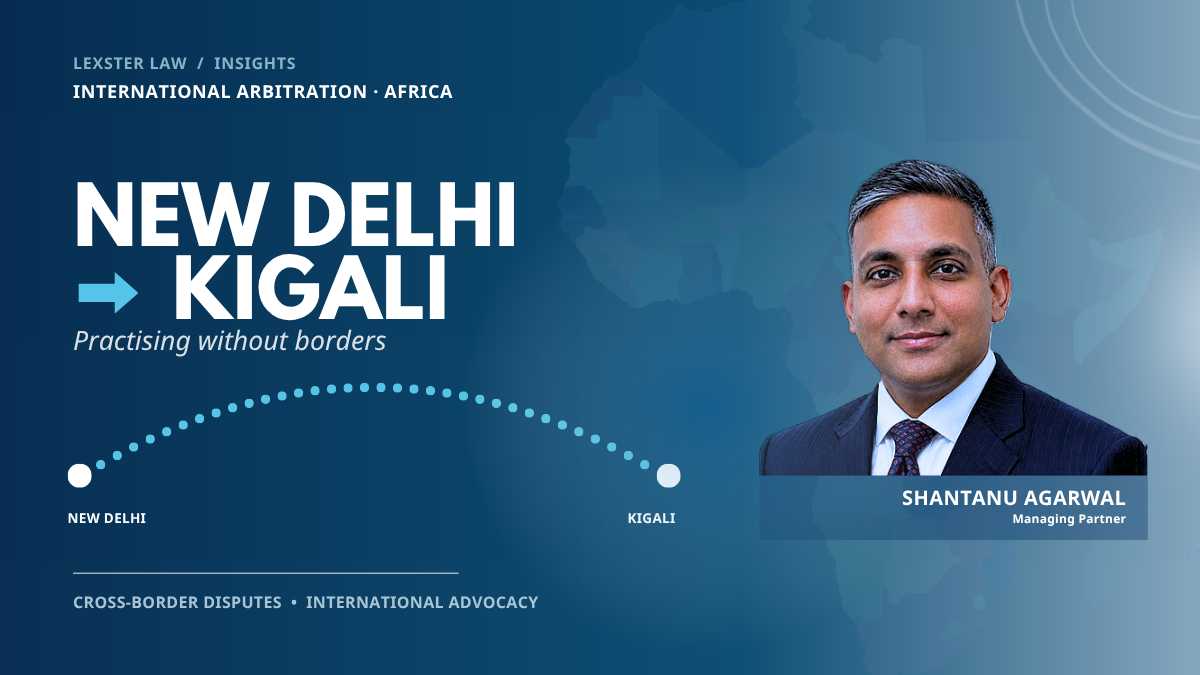
  • From New Delhi to Kigali

    From New Delhi to Kigali

    INTERNATIONAL ARBITRATION · AFRICA
    What an African-Seated Arbitration Taught Us About Practising Without Borders

    There is a kind of professional growth no classroom or moot can prepare you for: stepping into an entirely unfamiliar legal ecosystem, a foreign arbitral institution, foreign governing law, foreign co-counsel, and a three-member tribunal drawn from three continents and being expected to deliver for your client.

    That was Lexster Law’s experience in an arbitration seated in Kigali, under the rules of the Kigali International Arbitration Centre (KIAC) and governed by Rwandan law. Our client supplied educational technology to a government body under a procurement contract worth several million dollars. What began as a payment dispute did not stay one. Over the years that followed, it drew in a contested performance guarantee, hard-fought battles over interim relief, a challenge to one of the arbitrators, and litigation running in parallel before the local courts.

    This is a reflection on that journey and on what it means for an Indian firm to operate on the international stage.

    A truly international bench

    One of the defining features of the matter was the tribunal itself: a president practising in Singapore, an arbitrator from the Malaysian arbitration establishment, and an arbitrator from the Nigerian bar. Advocating before European, Southeast Asian, and African legal sensibilities at once demands more than legal competence. It demands cultural fluency — an understanding of divergent arbitral traditions and the ability to craft submissions that land across all of them. Where the institutional rules were silent, the tribunal exercised its procedural discretion to build bespoke frameworks for the dispute, and our submissions had to anticipate that elasticity rather than rely on a fixed playbook.

    Working inside a foreign legal order

    The contract was governed by Rwandan law, a civil-law system with French-influenced traditions, far from the common-law framework Indian practitioners are trained in. Determining liability, damages, and discharge of obligations meant engaging genuinely with that legal order, not citing it superficially.

    Operating inside that system meant building and directing a local capability. We engaged Kigali-based co-counsel for on-the-ground procedural execution and institutional familiarity with the KIAC, while strategy, case theory, and the conduct of the arbitration were led by us. International arbitration of this kind is rarely won by local knowledge alone or by foreign advocacy alone; it is won when a lead firm sets the strategy and orchestrates the right local resources to support it. That integration — not the local relationship in isolation — was the backbone of our approach.

    Interim relief, under fire

    The most intense phase was the fight over interim measures. Early in the proceedings, the counterparty moved to call our client’s performance guarantee and later facilitated the auction of the very equipment at the heart of the dispute by a third-party bank. We fought on several fronts at once: urgent applications under the institutional rules and the Rwandan arbitration statute; a succession of procedural orders restraining those steps; and responses to attempts to terminate those orders and to unseat the tribunal’s president.

    When the equipment was auctioned in breach of the tribunal’s orders, we adapted rather than retreated, quantifying the resulting loss and folding it into the principal claim. The tribunal ultimately found the counterparty in breach of its own procedural orders, drew the appropriate inferences, and compensated our client accordingly.

    A pandemic, parallel litigation, and a challenge to the president

    The arbitration ran through some of the most disrupted years in recent memory. COVID-19 turned planned hearings in Kigali into deferred, rescheduled, and finally virtual proceedings; we managed time zones across Rwanda, Singapore, Malaysia, and Nigeria and kept the case moving through India’s own lockdowns.

    In parallel, the counterparty took the dispute to the local commercial court to challenge the tribunal’s interim orders — and separately filed a formal challenge against the president, alleging bias. We worked through the interaction between the arbitral process and the national courts carefully and upheld the integrity of the tribunal throughout. The challenge was examined and dismissed; the tribunal’s impartiality was upheld without qualification.

    The outcome

    The final award ran decisively in our client’s favour — a multi-million-dollar recovery across principal and contractual interest, further compensation for the loss of the auctioned equipment, and a full award of costs against the counterparty on the costs-follow-the-event principle. The tribunal recorded that our client was, in its words, the clearly prevailing party.

    What this means for Indian firms

    There is a persistent assumption that international arbitration, especially in Africa and other emerging seats, is the preserve of large, Western-headquartered practices. This matter is one data point against it.

    We brought the full weight of Indian advocacy — rigorous analysis, disciplined document management, and composure under pressure to bear across three continents, inside an unfamiliar legal system, and secured a decisive result. The matter was led for our client by Mr. Ciccu Mukhopadhaya and Mr. Saurav Agrawal, whose advocacy across the interim-relief battles, the merits, and the procedural skirmishes was central to the result. A few lessons we carry forward:

    • Local resources matter — but they deliver most when directed within a coherent, lead-counsel-driven strategy.
    • Procedural agility — from interim relief to virtual hearings to arbitrator challenges — matters as much as a perfectly drafted memorial.
    • Institutional knowledge is earned through investment in research, preparation, and people.
    • Governing law is never a formality; a foreign legal order rewards genuine engagement and punishes superficiality.
    • Indian firms are ready. The era of confinement to domestic arbitration is behind us.

    Looking ahead

    This matter reaffirmed something we hold deeply: geography is no longer a limitation in international dispute resolution. Whether the seat is Mumbai, Delhi, Geneva, Singapore, London, Maputo or Kigali, the standard of advocacy should not change. The experience has since proved its worth well beyond Rwanda. The instincts sharpened in Kigali — reading an unfamiliar procedural order, integrating local counsel under a single strategy, holding a line through interlocutory turbulence — have carried directly into our work on cross-border disputes seated in Maputo, Laos, Nairobi, Doha, and elsewhere. As African and other emerging states grow in prominence and institutions like the KIAC continue to mature, we expect to see far more cross-border workflow through them, and we intend to be part of it.


    Lexster Law is a New Delhi disputes and advisory practice focused on international arbitration and cross-border litigation, backed by a global co-counsel network. Asian Legal Business (Thomson Reuters) named Lexster Law an ALB India Firm to Watch 2026 and Dispute Resolution Boutique Law Firm of the Year 2026.

    #InternationalArbitration  #CrossBorderDisputes  #Arbitration  #KIAC  #Rwanda  #DisputeResolution  #IndianLaw  #AfricaArbitration

  • A Guess in the Dark, or an Estimate in the Light? The Arbitrator’s Guesstimate

    A Guess in the Dark, or an Estimate in the Light? The Arbitrator’s Guesstimate

    The Viewpoint · External Publication
    Originally published on Bar & Bench ↗
    19 August 2026  ·  Shantanu Agarwal, Ananya Garg & Tazeen Ahmed

    Every arbitrator who has sat through final arguments faces a familiar difficulty: the breach is proved, the loss is real, but the arithmetic is nowhere to be found. Section 73 of the Contract Act, 1872 requires proof of actual loss, while commercial reality rarely permits precise calculation. In the gap between the two lies one of arbitration’s most consequential exercises: the honest estimate.

    Where precise proof of loss is genuinely impossible, a tribunal may arrive at an honest estimate. In Trishala Jain v. State of Uttaranchal, the Supreme Court distinguished a ‘guess’—an estimate without specific evidence—from a ‘calculation’ based on specific evidence and a ‘guesstimate’, which combines elements of both and carries greater certainty than a bare guess. The line is narrow: too little estimation may unfairly reward the breaching party; too much may become speculation and expose the award to challenge. This article examines how common law and civil law jurisdictions navigate this boundary and what their approaches reveal about the extent of arbitral discretion in assessing damages.

    Common Law: An Exception That Must Be Earned

    India’s position has deep roots in the common law tradition. In Gemini Bay Transcription Private Limited v. Integrated Sales Service Limited, the Court traced the principle to the Calcutta High Court’s decision in Frederick Thomas Kingsley v. Secretary of State for India, which held that damages are not uncertain merely because loss cannot be proved with mathematical certainty. What is required is reasonable certainty that the loss probably followed from the wrong.

    The Supreme Court has therefore permitted practical estimates of lost profit where exact proof is unavailable. In Mohd Salamatullah v. Government of Andhra Pradesh and A.T. Brij Paul Singh v. State of Gujarat, the Court awarded lost profit at fifteen per cent of contract value rather than insisting on exact proof. Construction and Design Services v. Delhi Development Authority similarly held that where the fact of loss is established but its precise amount cannot be quantified, honest guesswork may be used.

    The Delhi High Court has applied the same approach in arbitration. In Cobra Instalaciones judgment, it restored an award that apportioned loss from concurrent delays through honest estimation. In National Highways Authority of India v. ITD Cementation India Ltd, it held that practical guesswork based on reasonable material should not be disturbed merely because another figure could have been adopted. In Simplex Concrete Piles v. Union of India, it upheld an award representing roughly one-thirteenth of the sum claimed as a reasonable estimate drawn from the record.

    But discretion has firm limits. In Unibros v. All India Radio, the Supreme Court set aside an award for loss of profit, holding that formulae such as Hudson’s may assist estimation but cannot, by themselves, establish loss. Evidence of lost opportunity remains necessary; the court cannot “make a guess in the dark”. Batliboi Environmental Engineers Ltd. v. Hindustan Petroleum Corpn. Ltd. similarly stressed that damages must correspond to actual loss and must not create a windfall. In Radiance Infracon v. GLS Infratech, the Delhi High Court held that the law does not permit guesswork in vacuo: an estimate must have a reasoned basis and a nexus with the material on record.

    The same tension appears across the common-law world. In Chaplin v. Hicks, England’s Court of Appeal awarded damages for loss of a chance despite the practical difficulty of exact calculation. Singapore’s courts have also adopted a practical approach. In CEF v. CEH, the court recognised that some losses are inherently difficult to quantify precisely, while MFM Restaurants v. Fish & Co held that difficulty in proving the exact cause or amount of loss does not justify nominal damages where substantial loss is clear. In Story Parchment Co. v. Paterson Parchment Paper Co., the US Supreme Court similarly accepted that where the wrong itself makes certainty impossible, a just and reasonable inference may suffice.

    Civil Law: Estimation as Ordinary Judgment

    Civil law systems reach a similar result through a different route. Under French law, estimation is treated as part of the fact-finder’s ordinary function rather than an exceptional departure from proof. German law is similarly flexible, allowing estimation where the claimant has pleaded sufficient facts to support a minimum figure, without requiring exceptional circumstances or special justification.

    The Gulf approach goes further by treating estimation as a normal judicial function. Under the UAE Civil Code, where compensation is not fixed by law or contract, the judge may assess it based on the harm suffered. Article 390(2) also allowed courts to revise agreed damages to reflect actual loss, even where the parties had fixed a specific amount. This differed from Dunlop Pneumatic Tyre v. New Garage, Cavendish Square Holding v. Talal El Makdessi, and Kailash Nath Associates v. Delhi Development Authority, where agreed sums are generally respected subject to applicable legal limits.

    The UAE’s broad discretion has been narrowed by the new Civil Code, effective June 1, 2026. Article 340 replaces Article 390 and retains the power to adjust agreed compensation where it is excessive, the contract has been partly performed, or the creditor contributed to the loss. An award above the agreed amount now requires proof of fraud or gross fault. The reform therefore introduces greater structure while preserving the court’s ability to prevent unfair outcomes. Article 340 continues to preserve this power against contrary contractual arrangements.

    Saudi Arabia has taken a different path. Its Civil Transactions Law 2023 recognises loss of profit as compensable, reflecting a more flexible approach to uncertain future loss. The DIFC and ADGM, by contrast, continue to follow common law principles. For tribunals seated onshore in the Gulf, estimation remains an important judicial function, although the UAE now subjects it to clearer safeguards.

    UNIDROIT Principles

    Article 7.4.3(3) of the UNIDROIT Principles of International Commercial Contracts similarly leaves the assessment of damages to the tribunal where the amount cannot be established with certainty. The provision reflects the broader principle that lack of mathematical precision does not necessarily defeat a damages claim, provided the tribunal has a reasonable basis for its assessment.

    Convergence in investment arbitration

    Investment tribunals follow the Factory at Chorzów principle that compensation should, as far as possible, restore the position that would have existed without the wrongful act. Where future loss is uncertain, tribunals may estimate it but must avoid speculation. In Bear Creek Mining v. Peru, the tribunal rejected a discounted cash flow valuation for an early-stage project because of its uncertainty and awarded sunk costs instead. By contrast, Tethyan Copper v. Pakistan awarded nearly USD 6 billion for a mine that was never built. The lesson is that methodology alone does not create certainty; what matters is whether the reasoning connects the evidence to the amount awarded.

    Conclusion: The statutory fence

    The guesstimate doctrine cannot be understood apart from the statutory limits on an arbitral tribunal’s authority. Section 28(1)(a) of the Arbitration and Conciliation Act, 1996 requires a tribunal seated in India, other than in an international commercial arbitration, to decide according to Indian substantive law. The power to guesstimate is therefore derivative: it exists because Section 73 of the Contract Act, as judicially interpreted, permits estimation where loss is proved but its precise amount cannot be established.

    That power is fenced on two sides. First, Section 28(3) requires the tribunal to take the contract and applicable trade usages into account. In Associate Builders v. Delhi Development Authority, the Supreme Court held that an arbitrator who goes beyond the contract acts without jurisdiction, a principle reflected in Ssangyong Engineering v. NHAI as a form of patent illegality under Section 34(2A). An arbitrator who estimates loss contrary to an agreed measure of damages, or awards what the contract excludes, therefore exceeds the parties’ mandate. Garg Builders and Union of India v. Manraj Enterprises reinforce this contractual limit.

    The second fence is Section 31(3), which requires the award to be reasoned. Ssangyong held that mere contravention of Indian substantive law is not, by itself, enough to set aside an award. However, an unreasoned award, or one whose reasons show no connection with the material on record, remains vulnerable to challenge. The reviewing court’s inquiry is therefore narrow as it asks whether the arbitrator gave reasons and remained within the contract, rather than whether the figure was correct. This distinction matters because an appellate court is not entitled to substitute its own assessment merely because it would have preferred a different methodology or figure. The focus remains on legality, contractual boundaries and the adequacy of the reasoning. That is what keeps estimation from becoming speculation while preserving the tribunal’s limited role in quantifying proven loss.

    That is the quiet consequence of the doctrine. An arbitrator has no free-ranging judicial discretion, but a bounded power to estimate within statutory and contractual limits. Where the breach is proved, the loss is real, and precise arithmetic is absent, the estimate may stand—not necessarily because it was right, but because it was reasoned.

    About the authors: Shantanu Agarwal is the Managing Partner of Lexster Law LLP. Ananya Garg is a Senior Associate and Tazeen Ahmed is an Associate.

    Disclaimer: The opinions expressed in this article are those of the author(s). The opinions presented do not necessarily reflect the views of Bar & Bench.

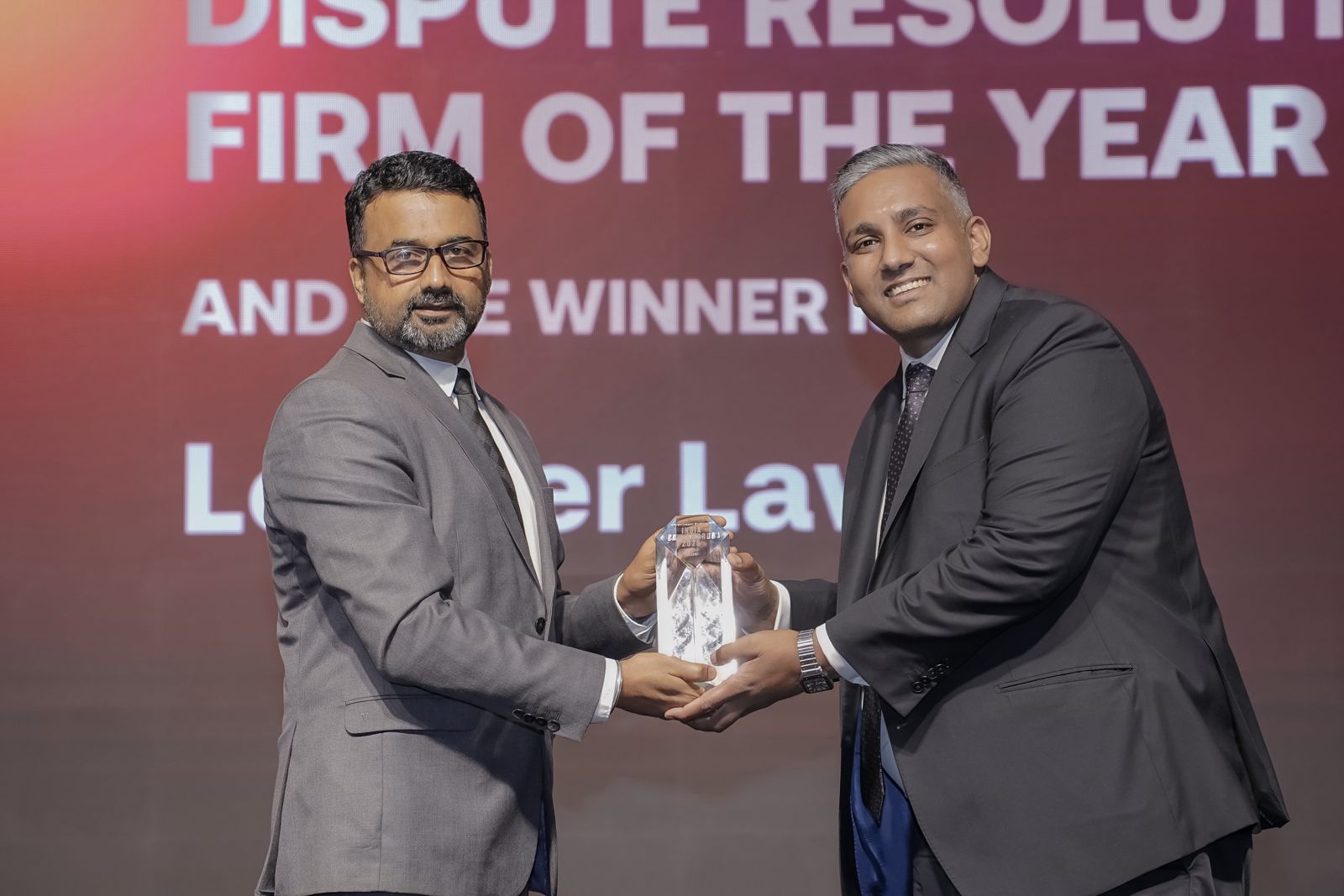
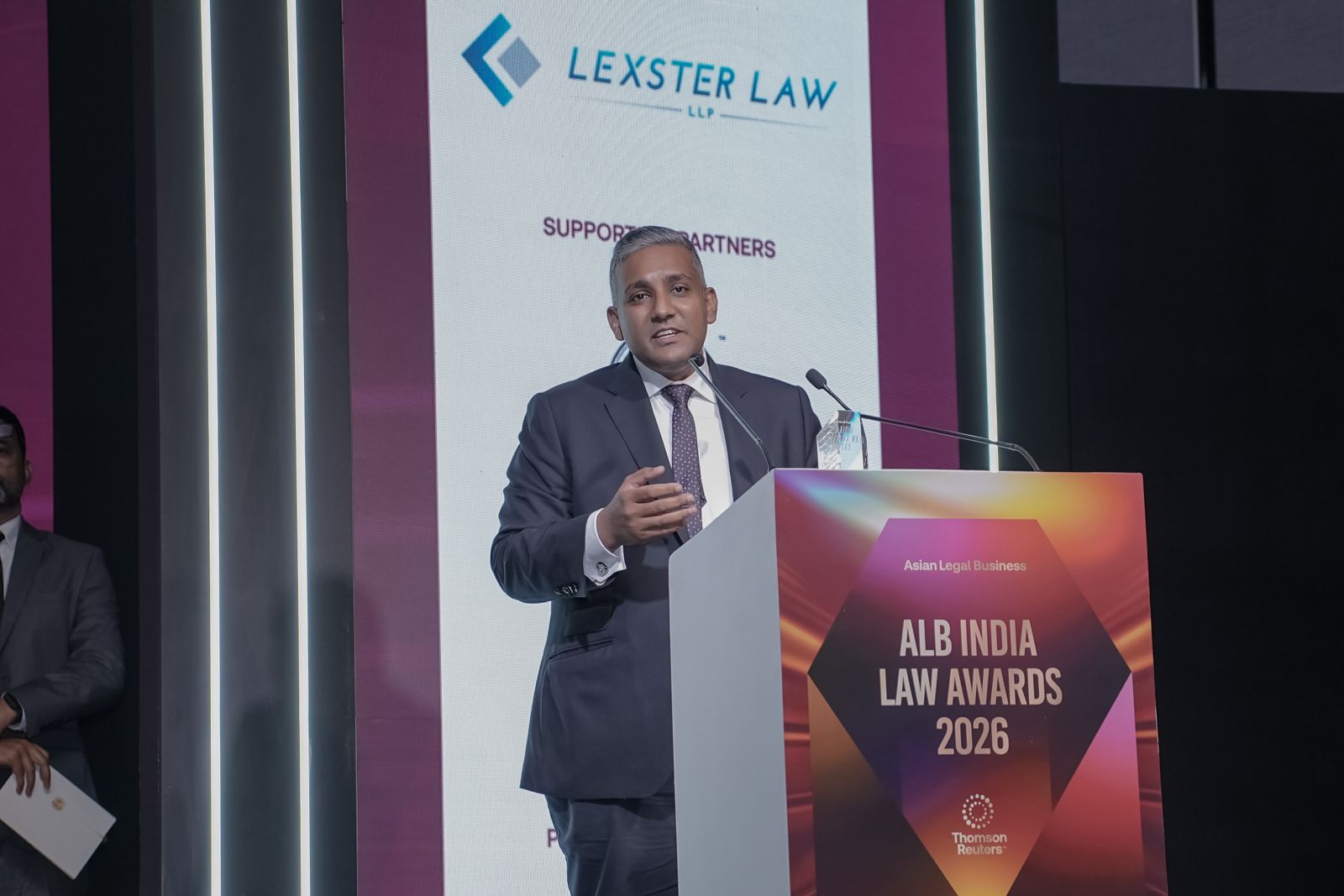
  • Lexster Law LLP Honoured at the ALB India Law Awards 2026

    Lexster Law LLP Honoured at the ALB India Law Awards 2026

    Lexster Law LLP is honoured to have been recognised at the ALB India Law Awards 2026, receiving the prestigious Dispute Resolution Boutique Law Firm of the Year 2026 award. The Firm was also recognised as an ALB India Firm to Watch 2026, reflecting its growing presence and contribution to India’s evolving legal landscape.

    The ALB India Law Awards celebrate excellence, innovation, and outstanding achievements within the legal profession. These recognitions reaffirm Lexster’s unwavering commitment to delivering strategic, client-centric dispute resolution services while upholding the highest standards of professionalism, integrity, and legal excellence.

    This milestone would not have been possible without the continued trust and confidence of our clients, the encouragement of our colleagues and peers, and the invaluable support of our dedicated team and Of Counsels. Their commitment, expertise, and collaborative spirit have been instrumental in this achievement.

    As we celebrate this recognition, we remain steadfast in our commitment to delivering exceptional legal solutions, fostering meaningful client relationships, and continuing to contribute to the advancement of dispute resolution in India.

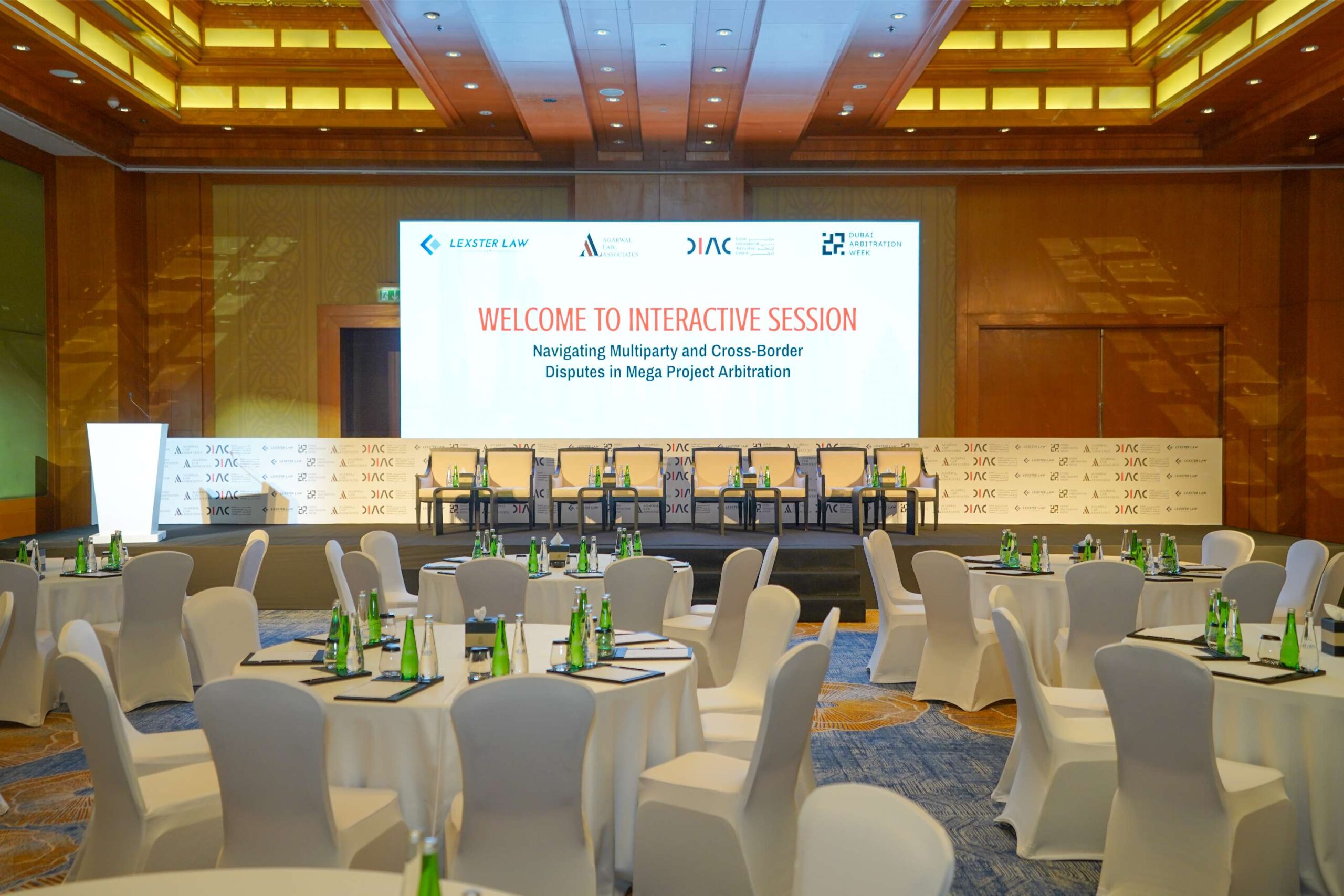
  • Dubai Arbitration Week 2025: Lexster Law hosts Panel discussion on Navigating Multiparty and Cross-Border Disputes in Mega Project Arbitration.

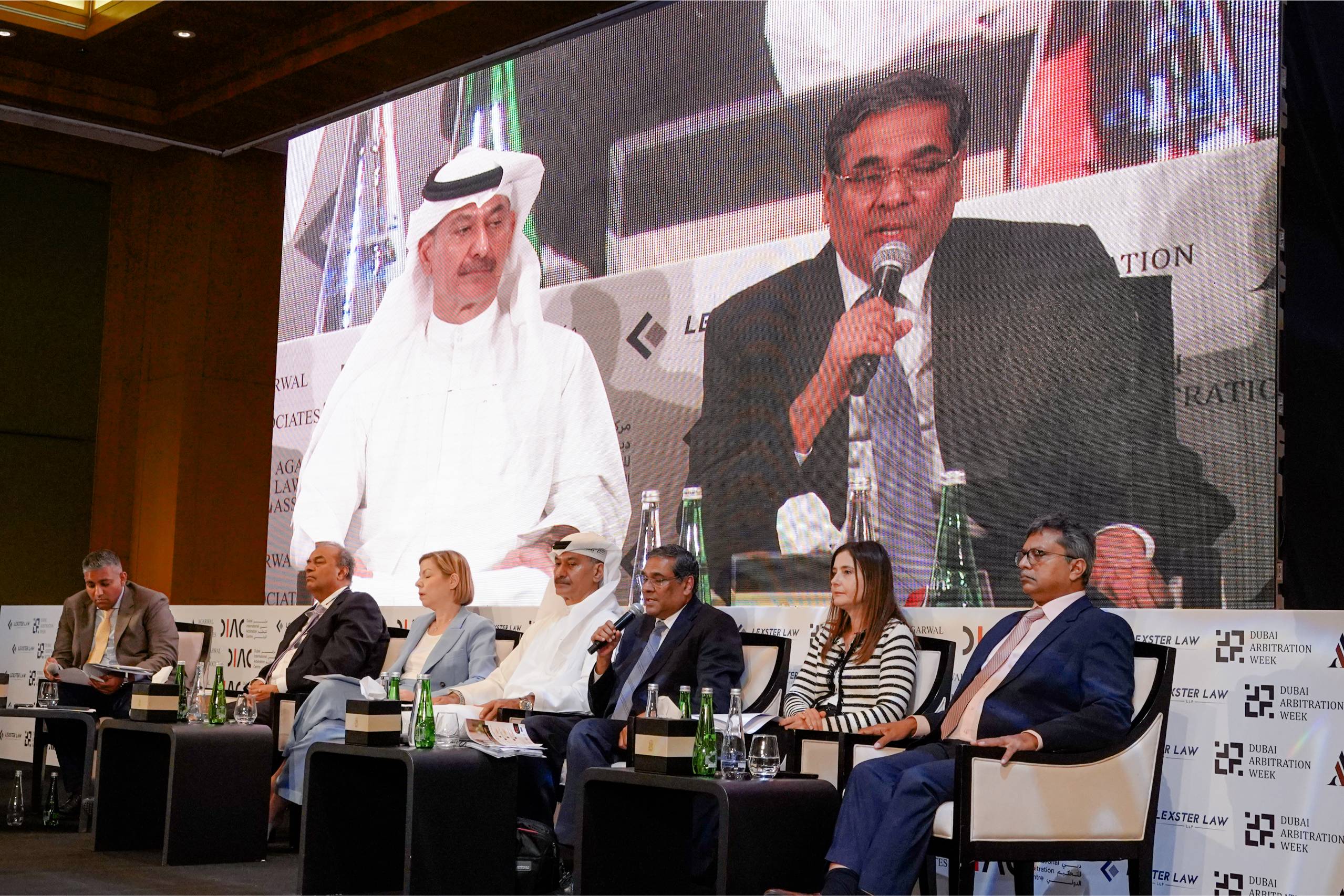
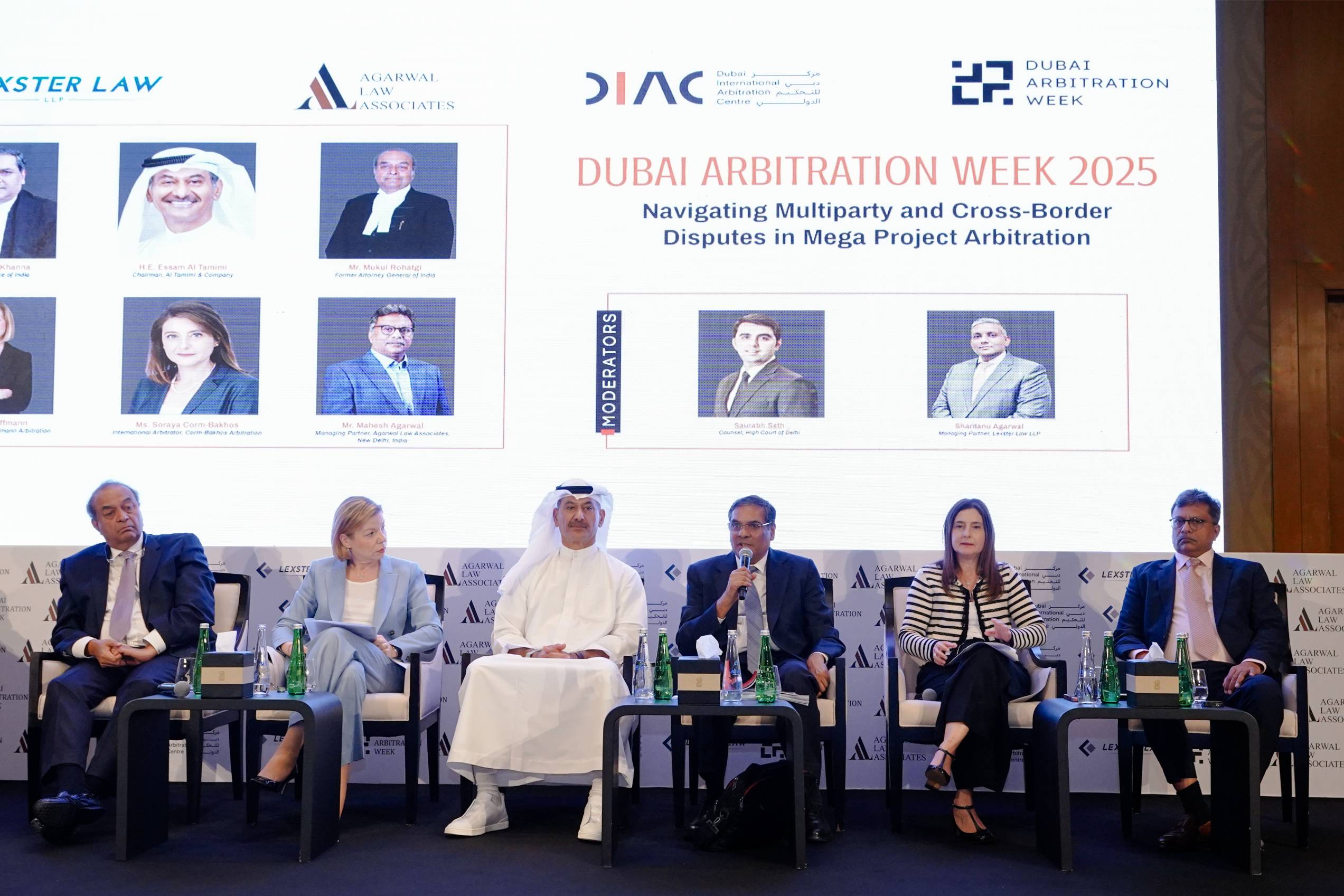
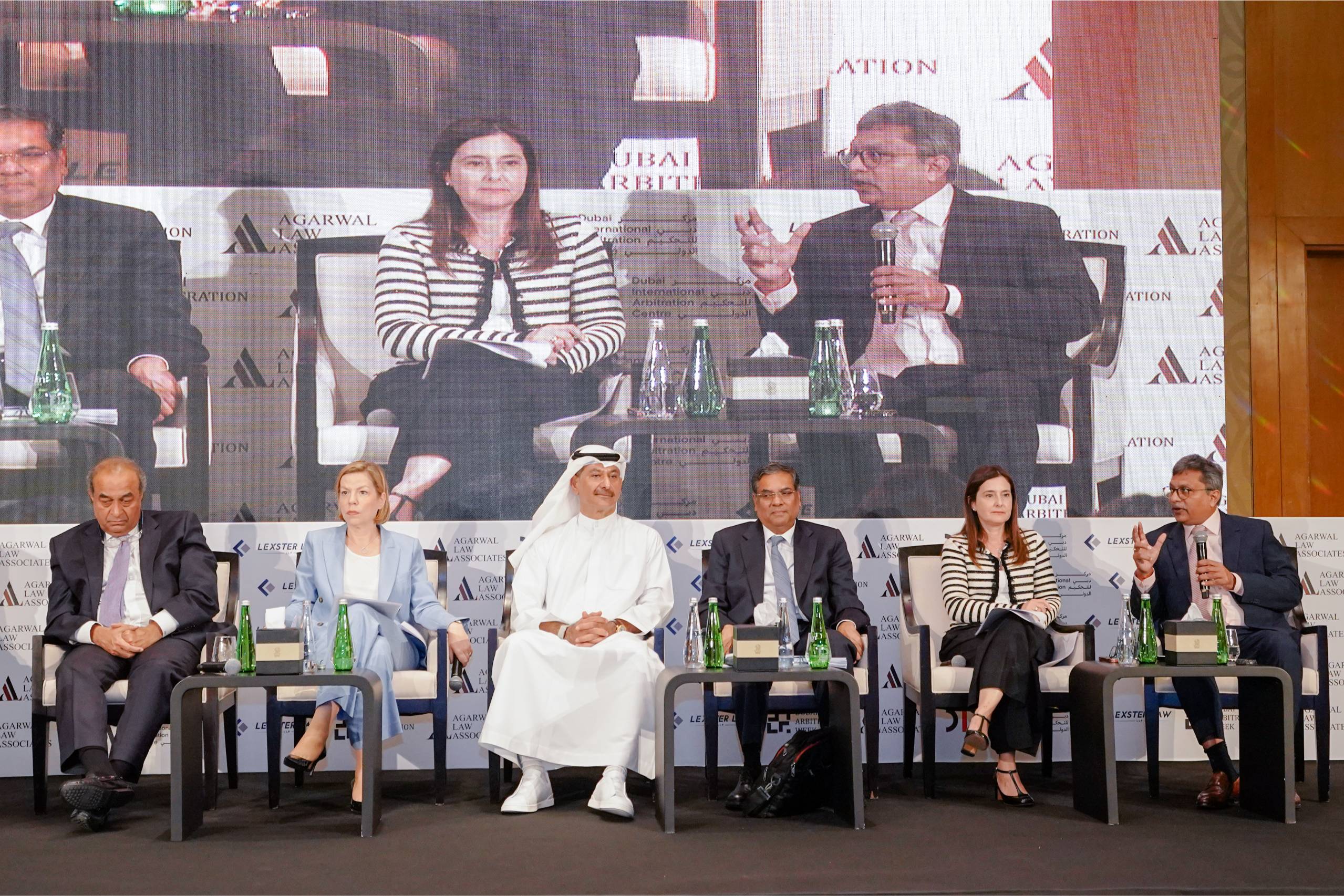
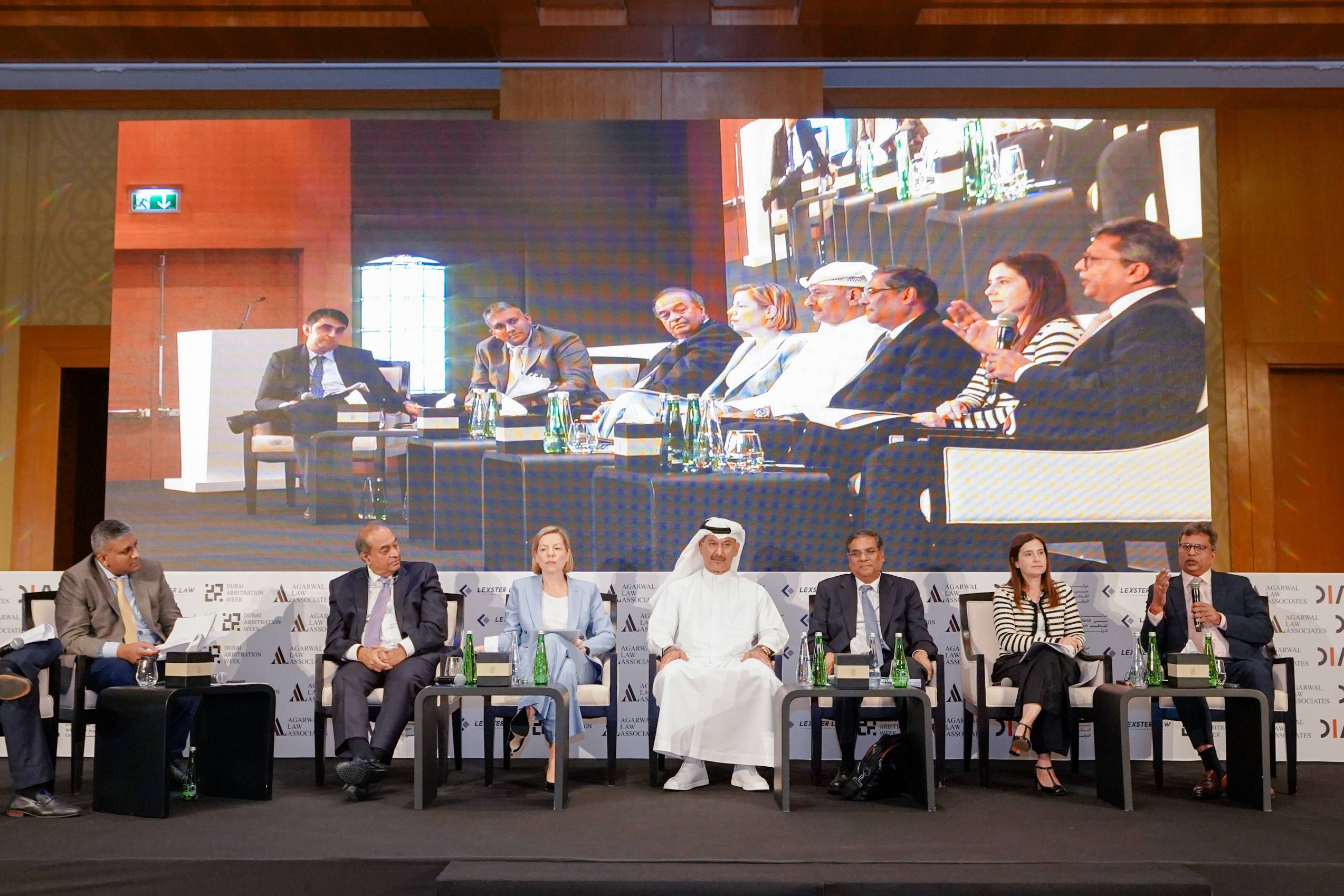
    Dubai Arbitration Week 2025: Lexster Law hosts Panel discussion on Navigating Multiparty and Cross-Border Disputes in Mega Project Arbitration.

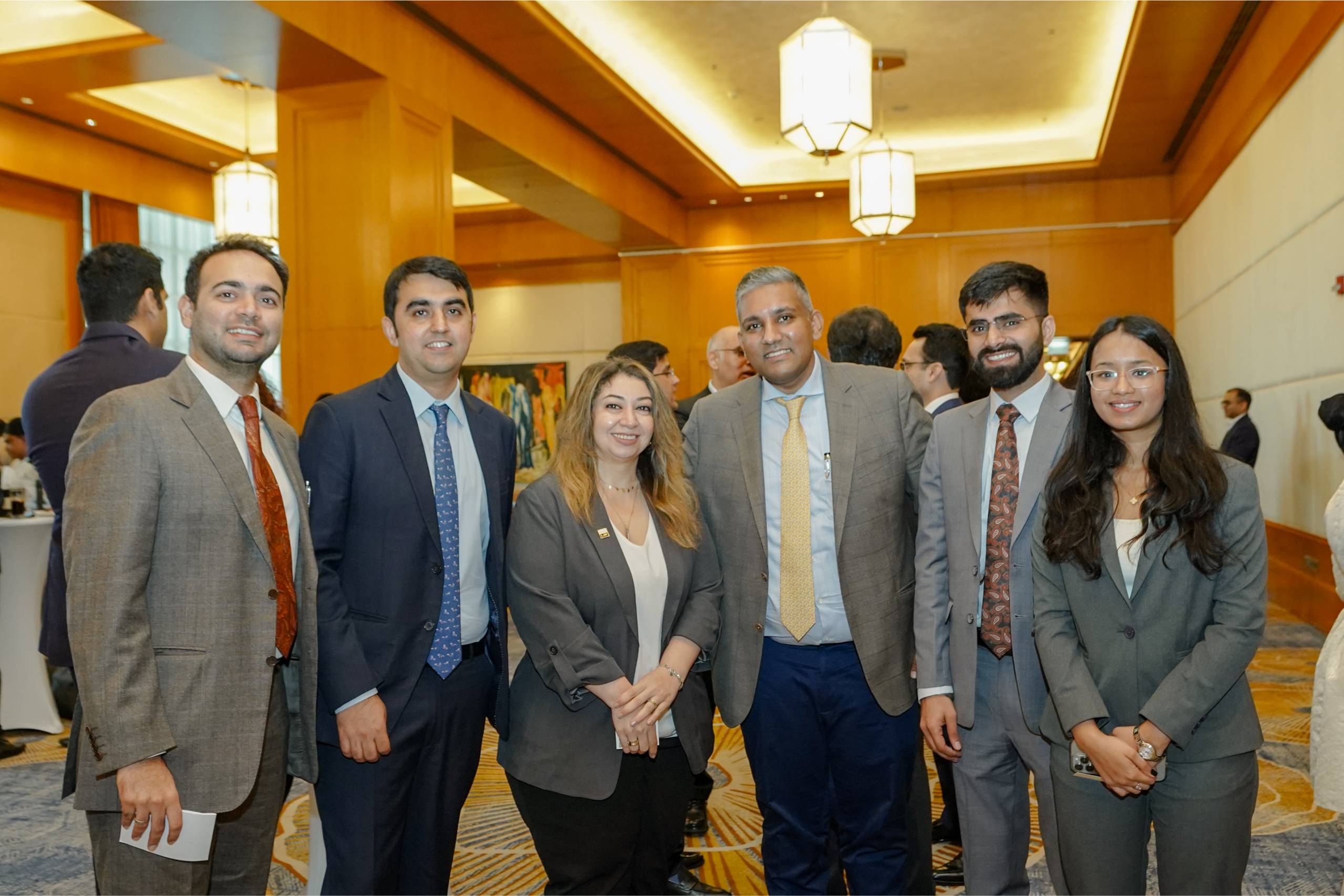
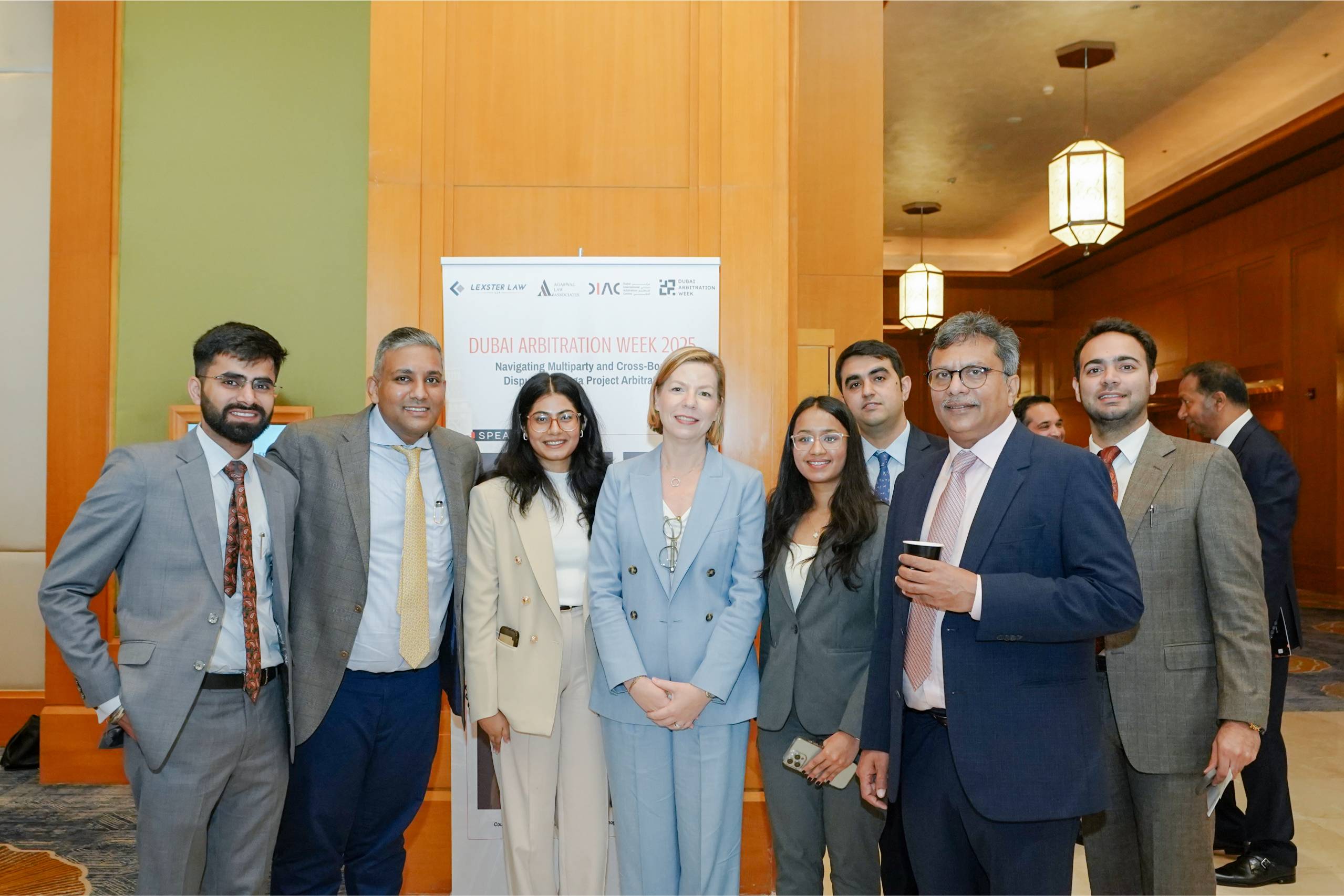
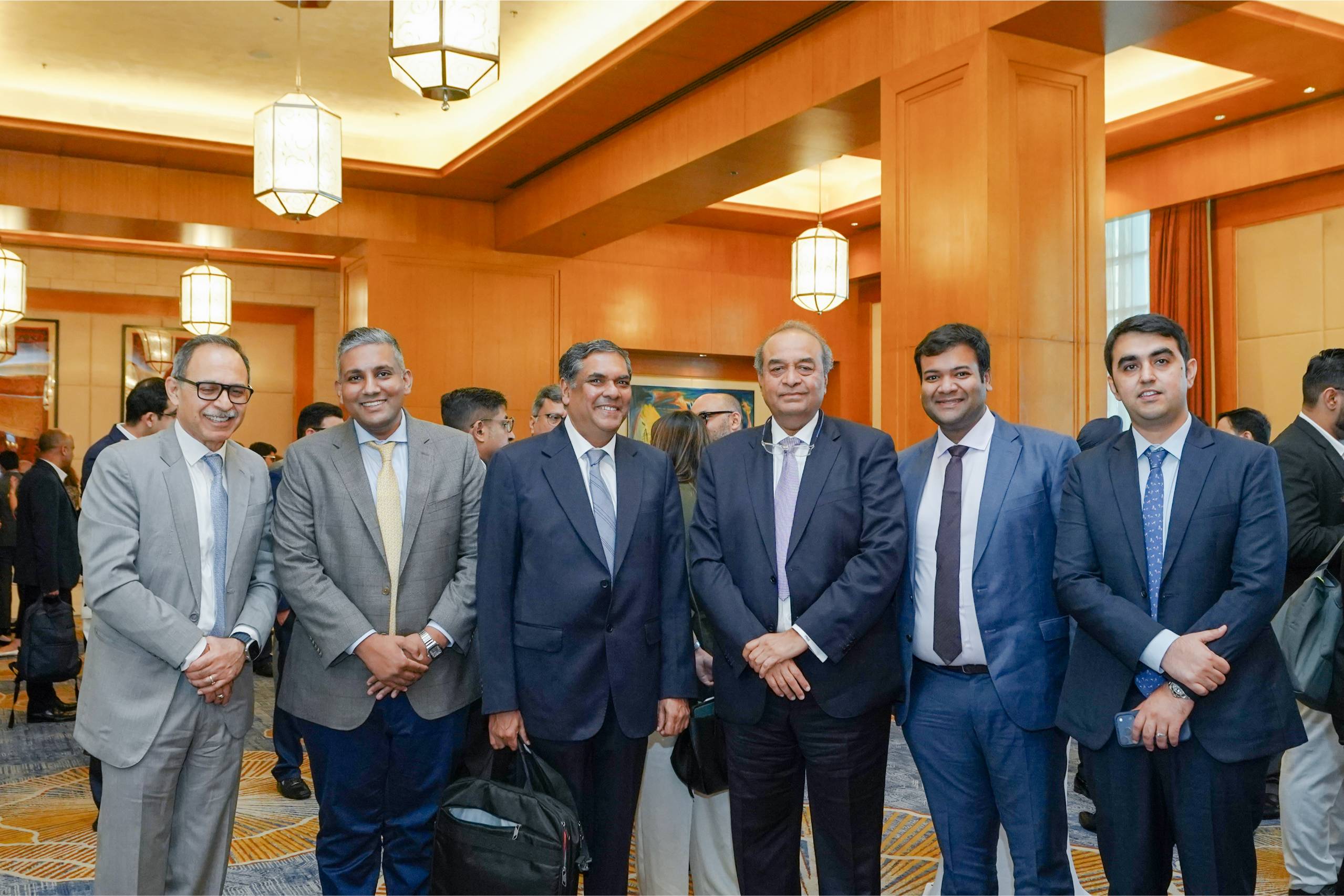
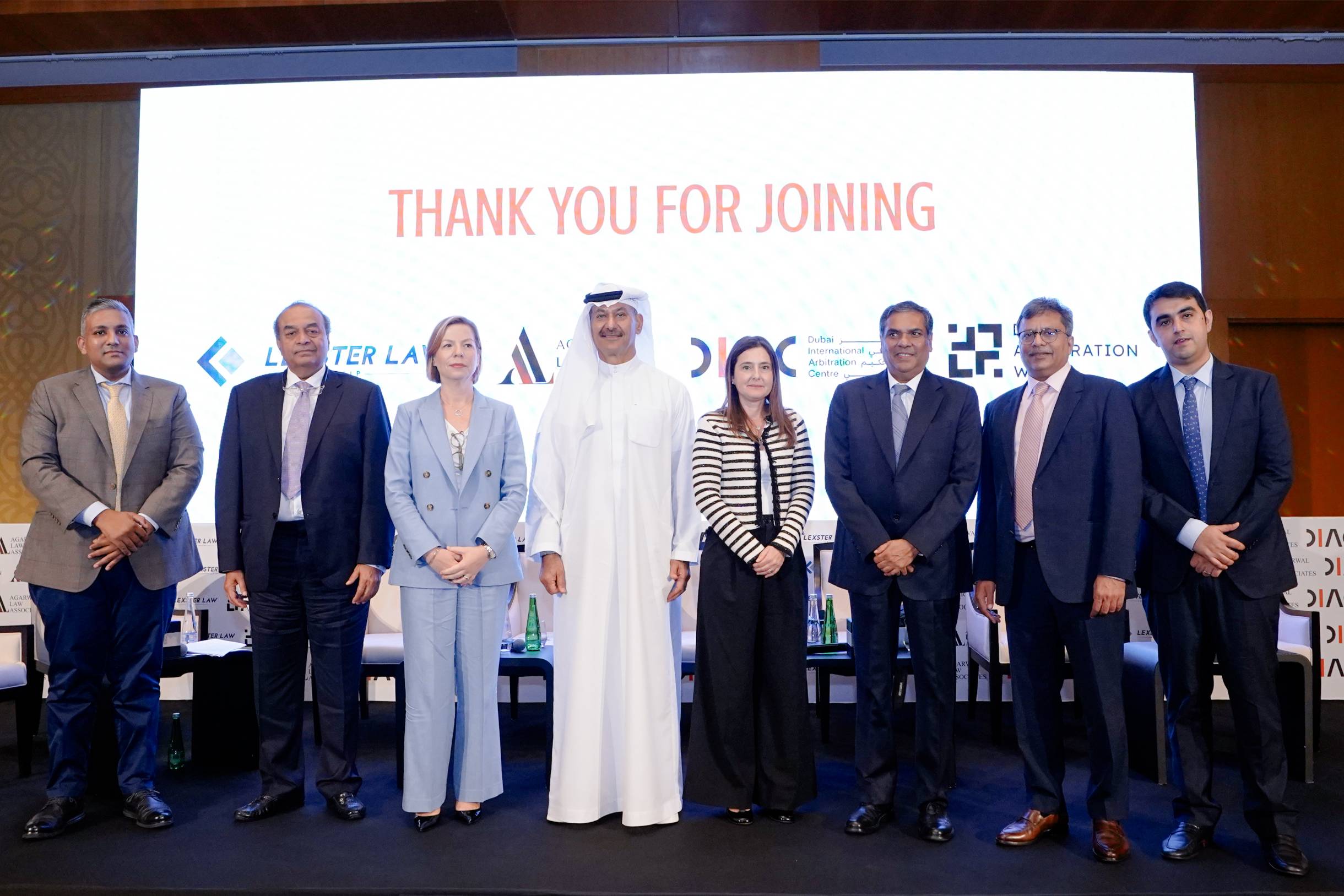
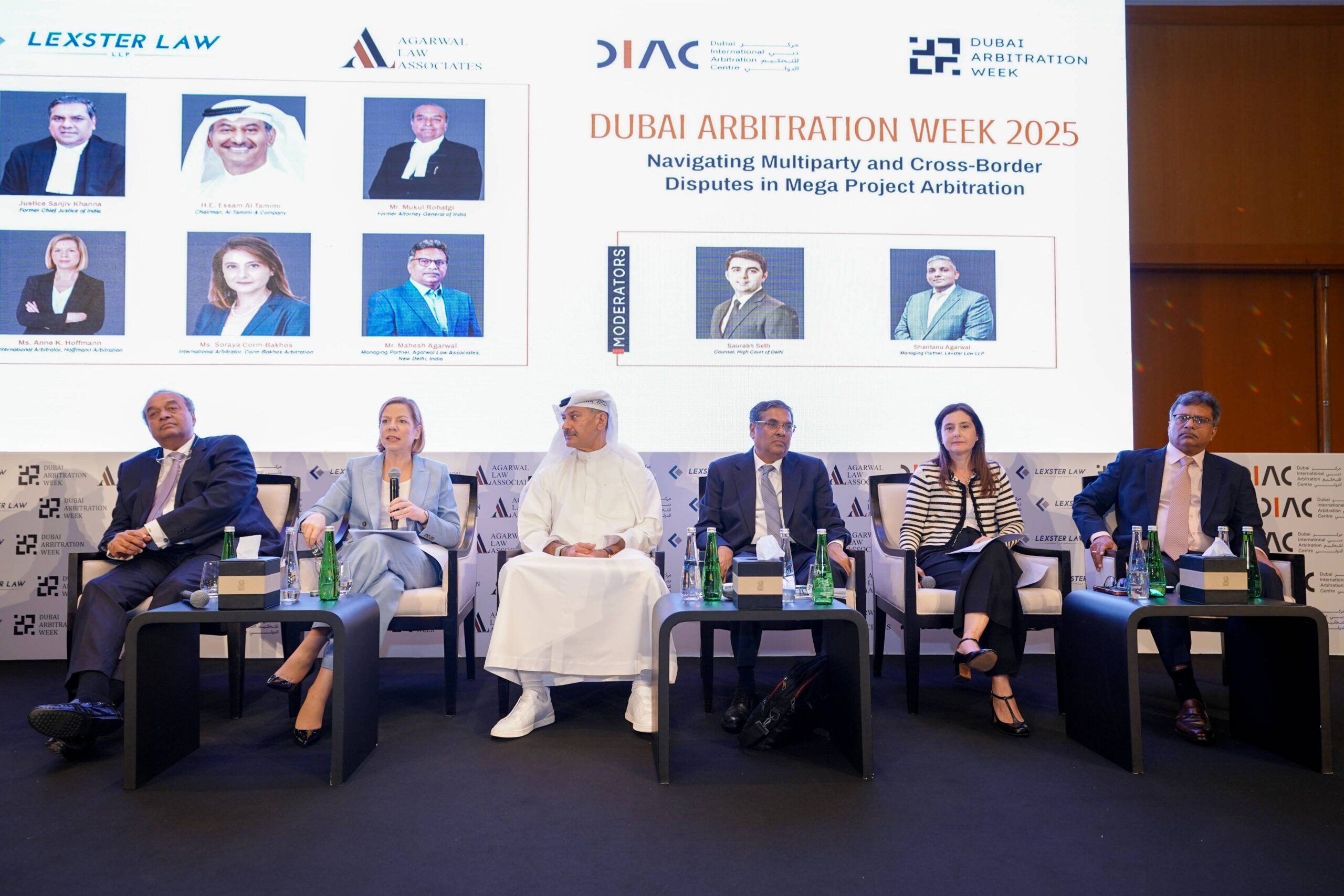
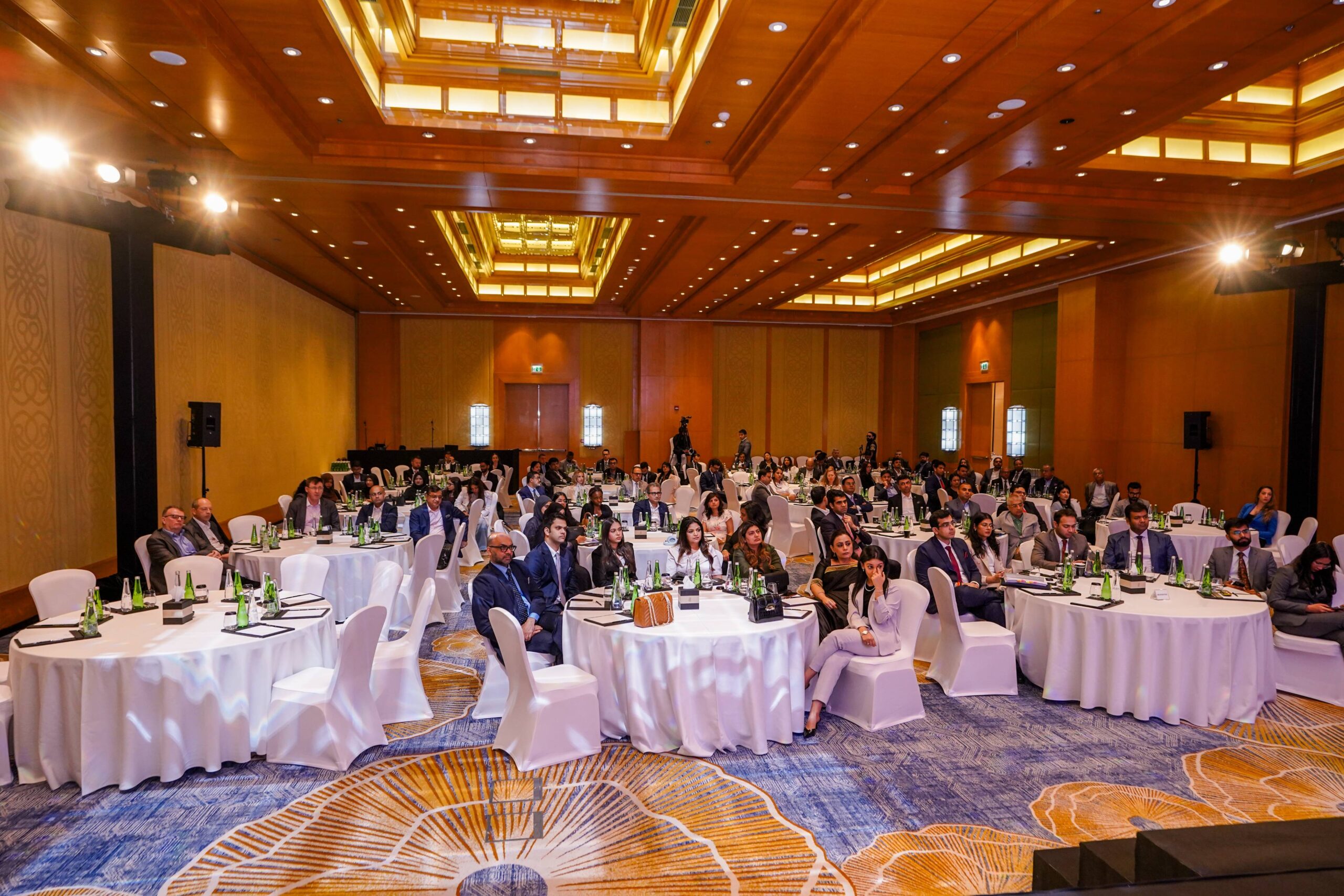
    Lexster Law had the honour of being a Gold Sponsor at the Dubai Arbitration Week 2025 organised by Dubai International Arbitration Centre (DIAC), one of the most prestigious global convening in the world of arbitration.

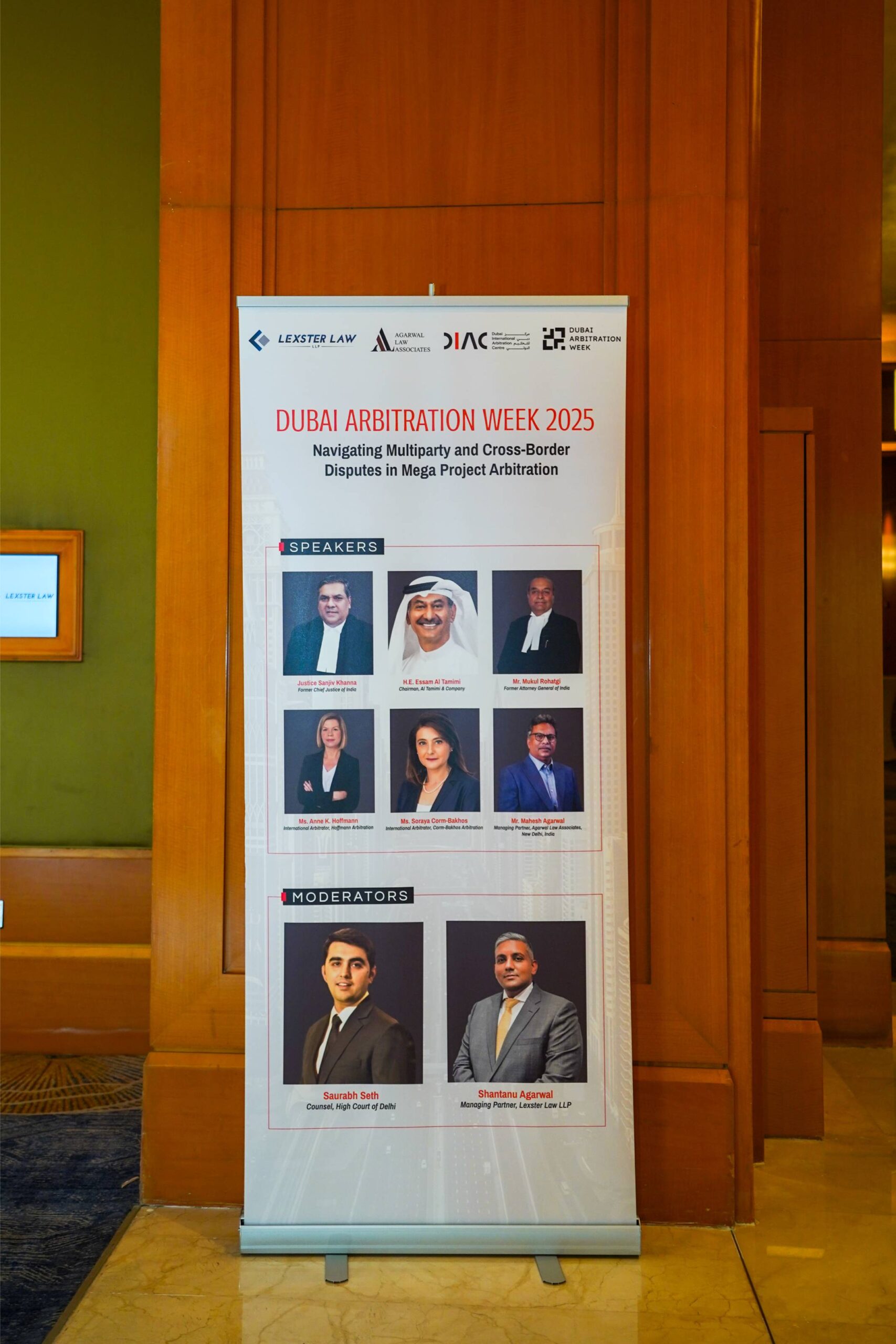
    One of the proudest moments came when we co-hosted a panel discussion on Navigating Multiparty and Cross-Border Disputes in Mega Project Arbitration. We had a stellar panel of speakers, including: Justice Sanjeev Khanna (Former Chief Justice, Supreme Court of India), Mr. Essam Al Tamimi (Chairman at Al Tamimi & Company), Mr. Mukul Rohatgi (Former Attorney General of India), Ms. Anne K. Hoffmann (International Arbitrator), Ms. Soraya Corm-Bakhos, (FCIArb,International Arbitrator), Mr. Mahesh Agarwal.

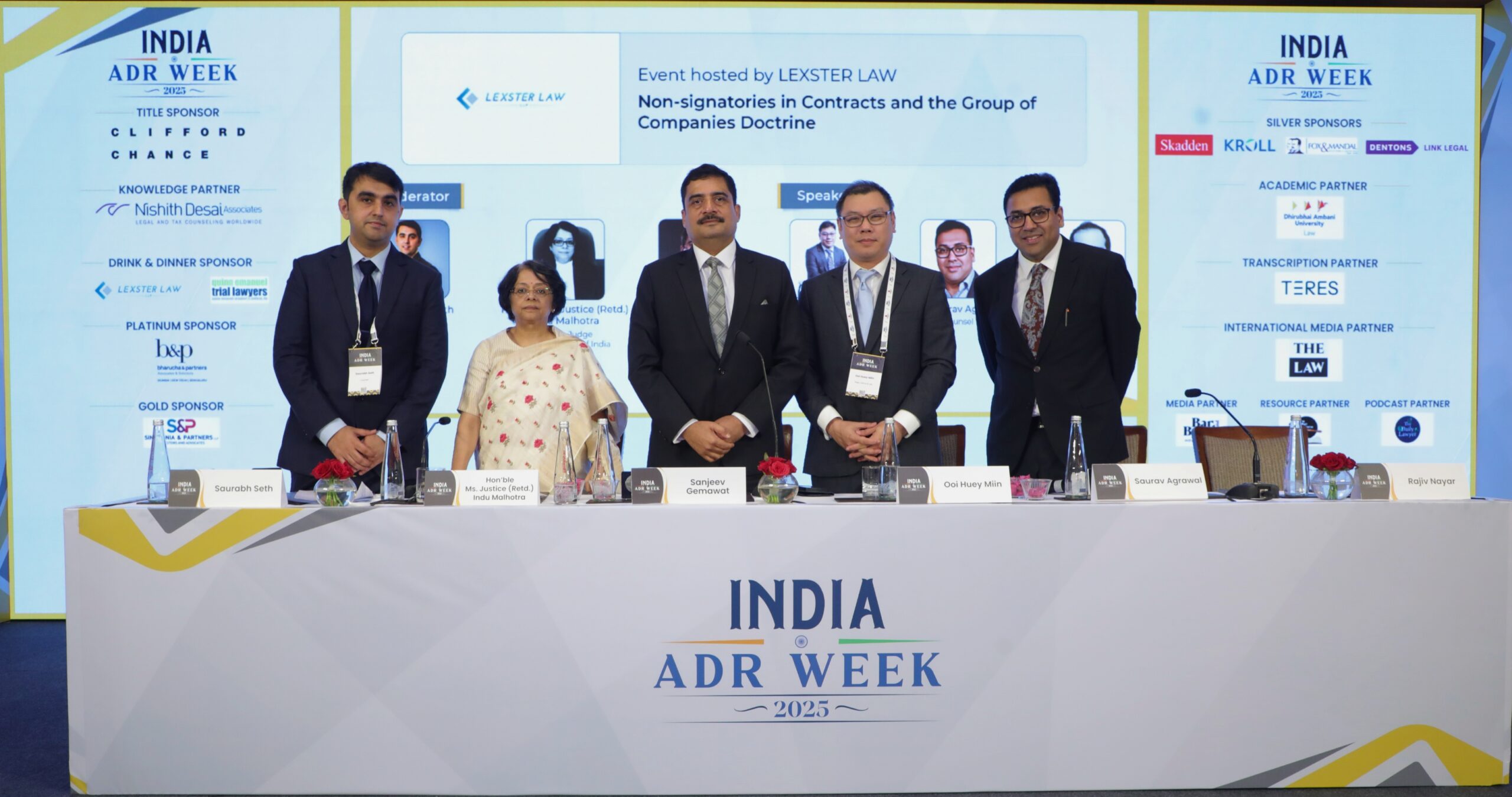
  • India ADR Week 2025: Exploring the Group of Companies Doctrine and Non-Signatories in Arbitration

    India ADR Week 2025: Exploring the Group of Companies Doctrine and Non-Signatories in Arbitration

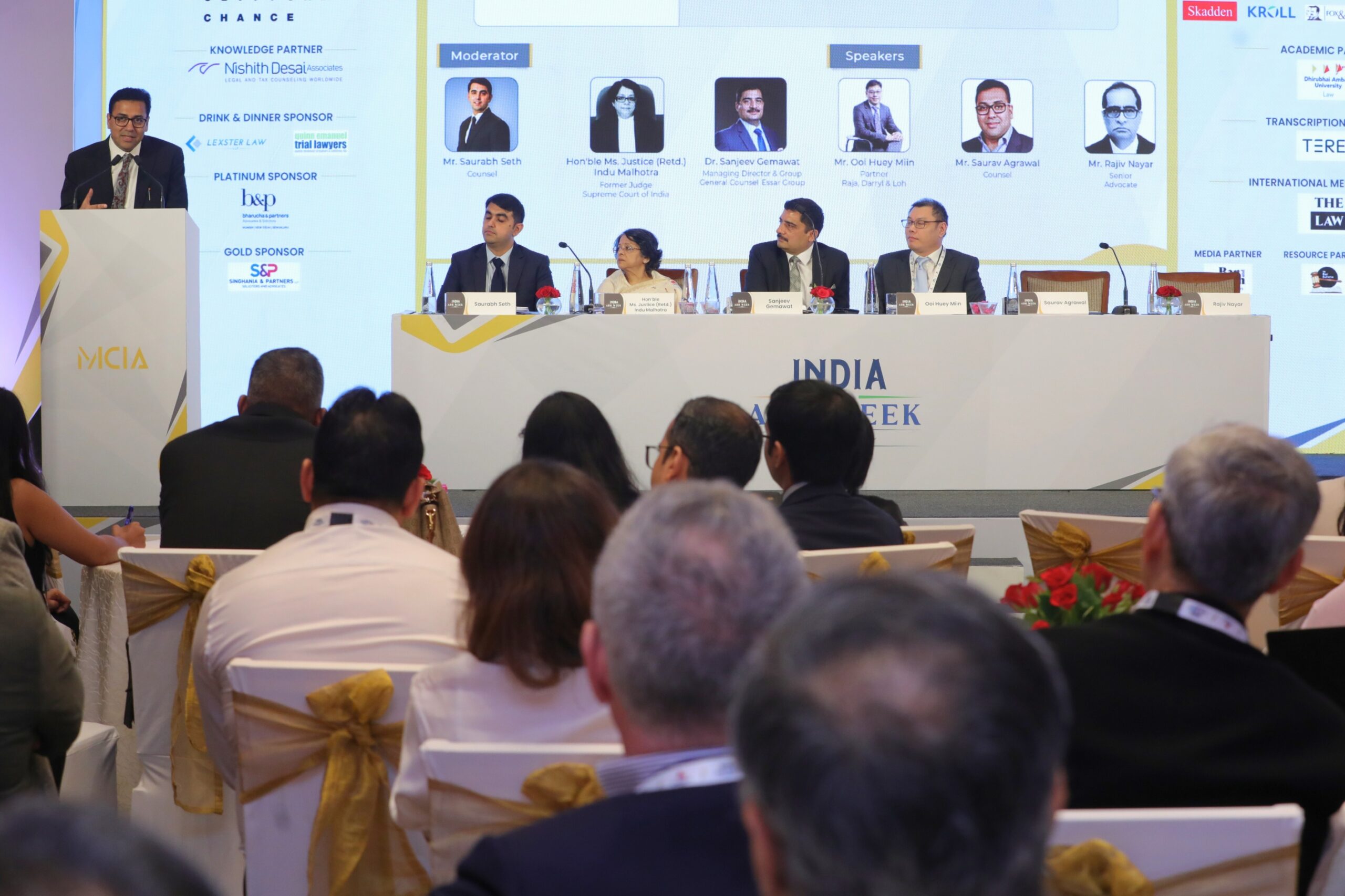
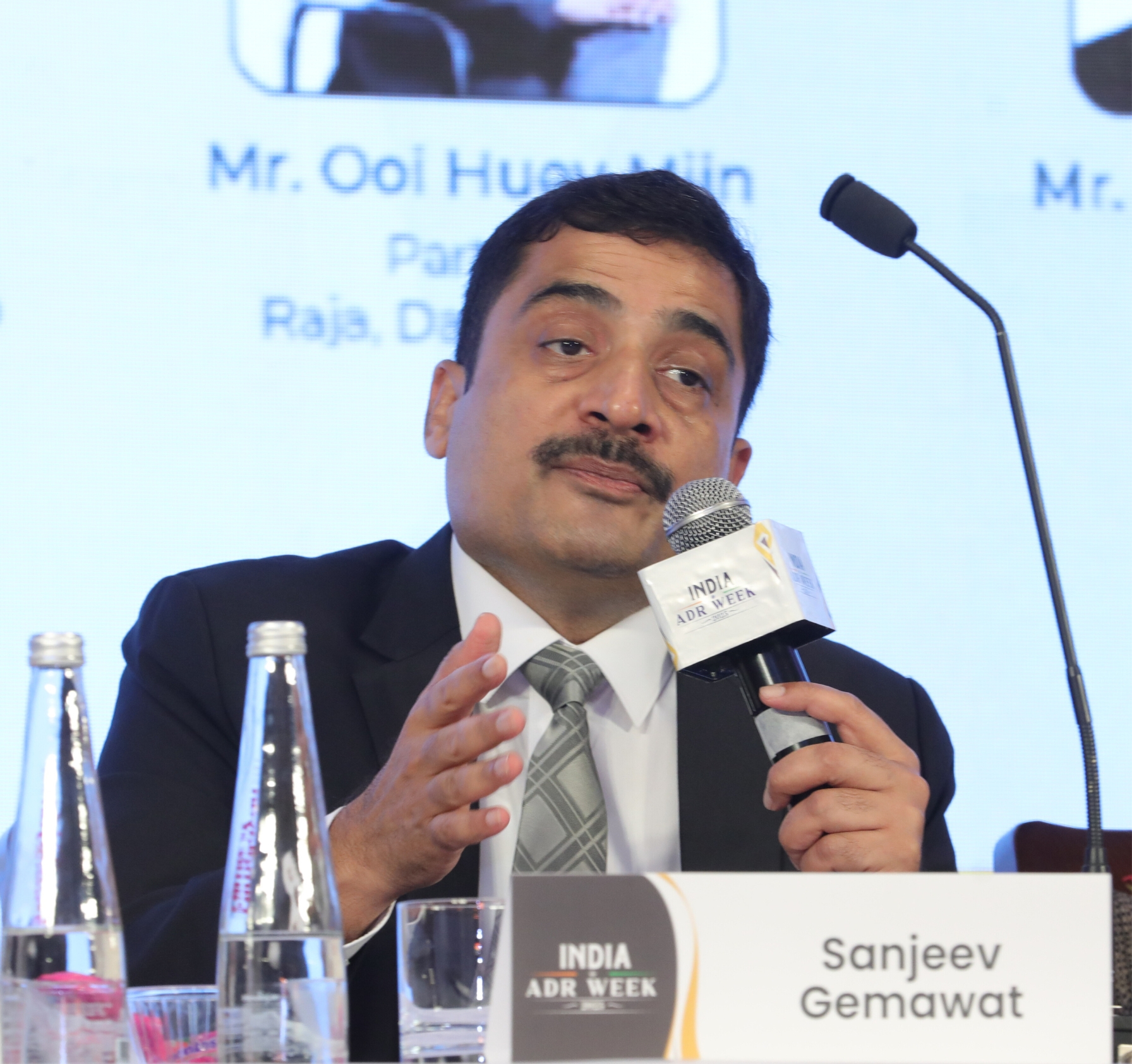
    We hosted a panel discussion during India ADR Week 2025 on 18 September 2025 on “Non-Signatories in Contracts and the Group of Companies Doctrine”, featuring Hon’ble Ms. Justice Indu Malhotra (Former Judge, Supreme Court of India), Dr. Sanjeev Gemawat (Managing Director & Group General Counsel, Essar Group), Mr. Ooi Huey Miin (Partner, Rajah Darryl & Loh, Malaysia), and Mr. Saurav Agrawal (Counsel, New Delhi). The session was moderated by Mr Saurabh Seth, Counsel, New Delhi.